
Solving for Power: A practical guide for manufacturing startups and site selectors
If you’re trying to land a new manufacturing site in the 2–4 MW range, you’ve probably heard some version of the same message: “We can get you there — but it’s going to take 24+ months.”
For a new factory, that timeline can kill the deal. It forces bad tradeoffs: signing a lease that can’t support production, delayingequipment procurement, or moving to a second-choice location simply because it has power today.
The good news: in many cases, the grid isn’t “out of power” — it’s constrained for a small number of hours. If your load factor is 60% or less, there’s often a path to a meaningful upgrade in about three months, not two years.
Why the “two-year wait” happens
Most distribution systems are planned around rare peak conditions — typically the hottest afternoons of the year. The limiting equipment might be a feeder segment, a transformer bank, or a substation element that only becomes constrained during extreme weather and peak demand. For many industrial sites, the actual constraint is surprisingly narrow:

Historically, utilities have been forced into an all-or-nothing approach: if your site couldn’t be fully served during those peak hours, the answer was “wait for construction.” That construction is what takes 18–36 months
What’s changed — and why it matters to site selection
In places like California, utilities can now offer customers an option that looks more like real-world operations: “We can increase your service most of the time, as long as you accept limits during a small set of constrained hours.”
This is often called a Flexible Service Connection. The utility provides a Limited Load Profile — essentially a schedule of how much power you can safely import at different times of year or times of day.
For site selectors, this changes the lens. You’re no longer stuck evaluating buildings as “has power / doesn’t have power.” You can evaluate:
● What power is available most of the year
● When limits apply
● Whether the business can manage around them
▶ That’s a much more actionable way to de-risk a location.
The Key Insight: Most factories don’t run at peak load 24/7
Many new manufacturing operations have:
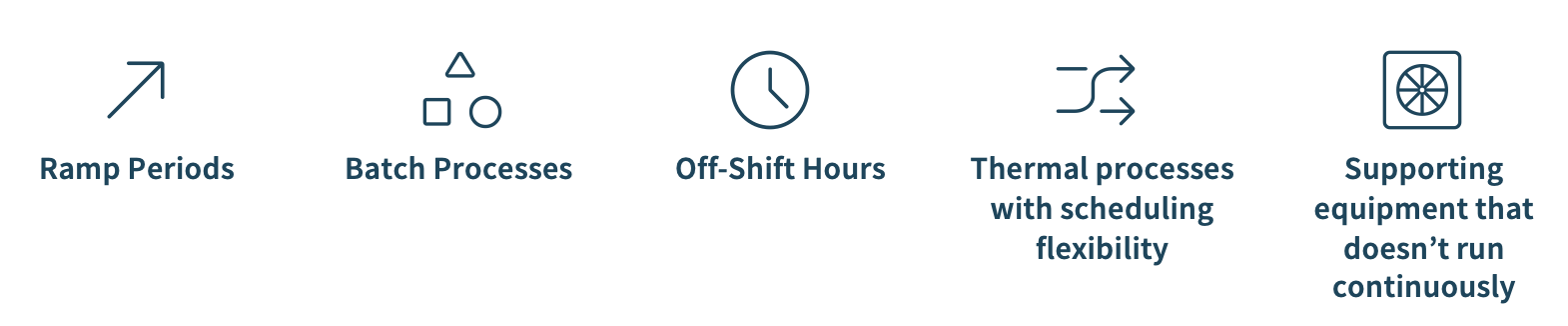
Even when nameplate load is high, the actual load factor is often well below 60% early in a plant’s life. That matters because if your facility can shift or buffer the constrained hours, you can often accept a flexible profile.
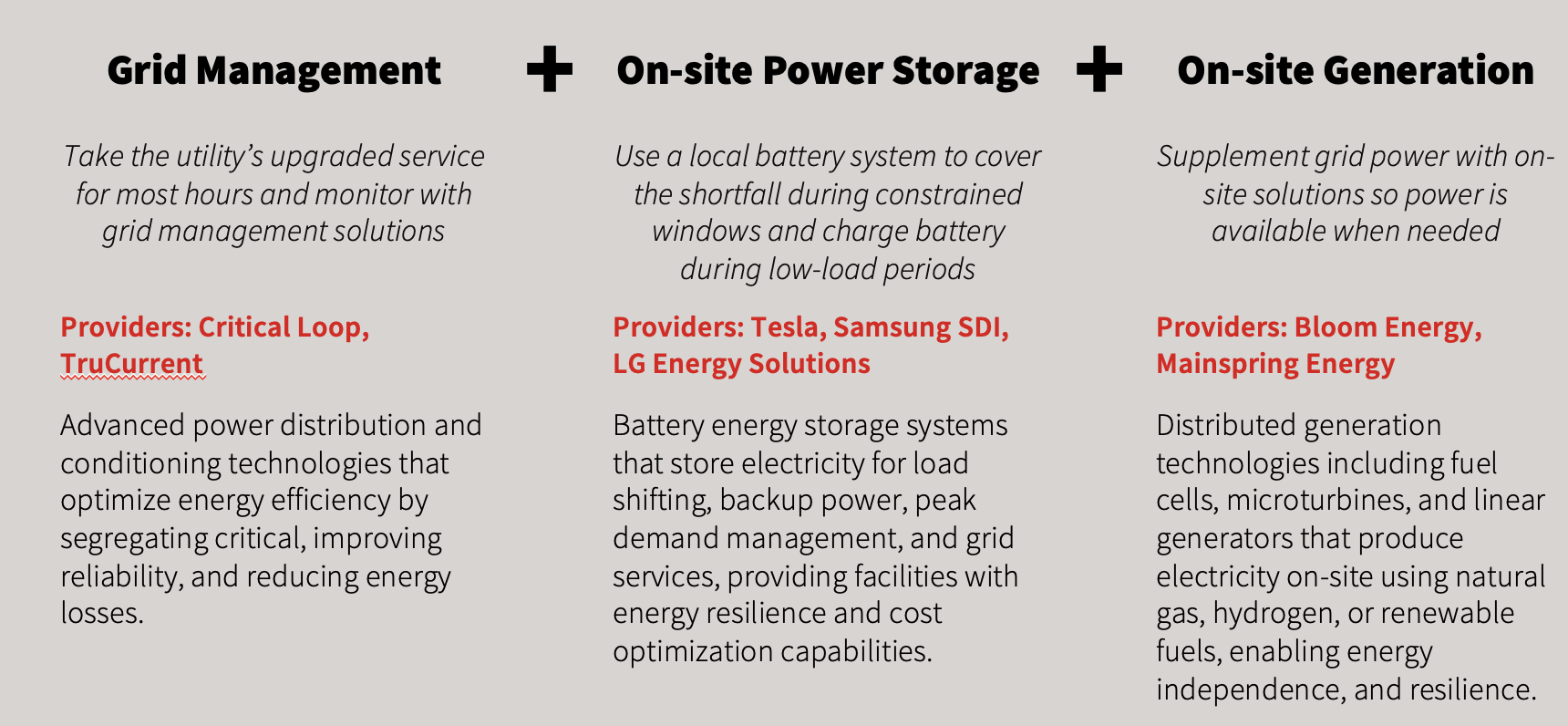
The common solution: pair flexible utility service with local storage and on-site generation
Once you know the constraint window, the solution becomes straightforward:
What to do next: A simple playbook
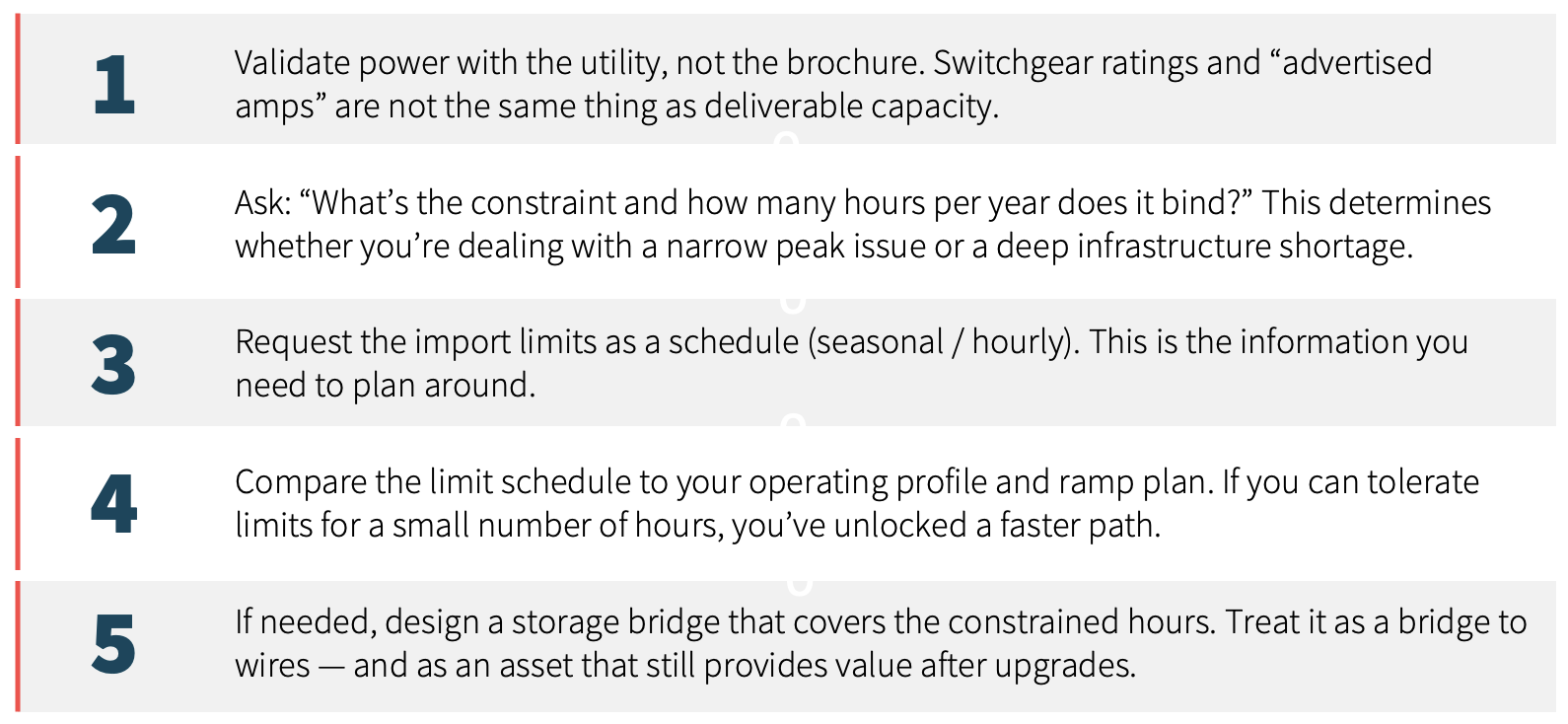
If you’re shortlisting sites and power is the gating item, here’s the sequence that tends to work:
The bottom line
For many new manufacturing loads, the “two-year wait” is driven by a small number of peak hours — not a lack of total capacity. If your operations don’t require full peak power every hour of the year, there’s often a practical path to meaningful capacity in months. Site selection is increasingly a power problem — but it doesn’t have to be a binary one.